Commercial Epoxy Flooring Guide
Free project tools
Use this guide with planning tools
Epoxy & Garage Floor Cost Calculator
Use garage presets or exact dimensions, compare coating systems and preparation, then share a contractor-ready cost plan.
Calculate Cost →Contractor Hiring Checklist
10 essential questions to ask before hiring an epoxy contractor. Check them off as you go.
View Checklist →Square Footage Calculator
Measure your room, calculate material needs, and get a ballpark cost estimate in seconds.
Calculate Size →Epoxy flooring has become the go-to choice for a wide range of commercial and industrial spaces. From warehouses and manufacturing facilities to restaurants and retail showrooms, it offers a combination of durability, chemical resistance, and visual appeal that's hard to match at the price point. If you're a business owner considering epoxy for your facility, here's what you need to know.
Why Businesses Choose Epoxy
Commercial flooring needs to handle demands that residential floors never face: forklift traffic, chemical spills, constant foot traffic, heavy equipment, and strict safety or sanitation requirements. Epoxy meets these challenges while offering several advantages over alternatives like polished concrete, VCT tile, or bare concrete:
- Durability: Commercial-grade epoxy systems withstand heavy loads, abrasion, and impact far better than painted or bare concrete surfaces.
- Chemical resistance: Epoxy resists oils, solvents, acids, and cleaning chemicals that would damage or stain other flooring types.
- Easy maintenance: The seamless, non-porous surface is simple to clean and doesn't harbor bacteria, making it ideal for food service and healthcare settings.
- Safety options: Anti-slip aggregates can be added to the topcoat, and line striping for traffic lanes, walkways, and safety zones is straightforward.
- Cost-effective: At $3 to $12 per square foot installed, epoxy is significantly cheaper than many commercial flooring alternatives.
Types of Commercial Epoxy Systems
Not all epoxy coatings are suited for every commercial application. Here are the most common systems used in commercial settings:
| System | Cost/sq ft | Best For |
|---|---|---|
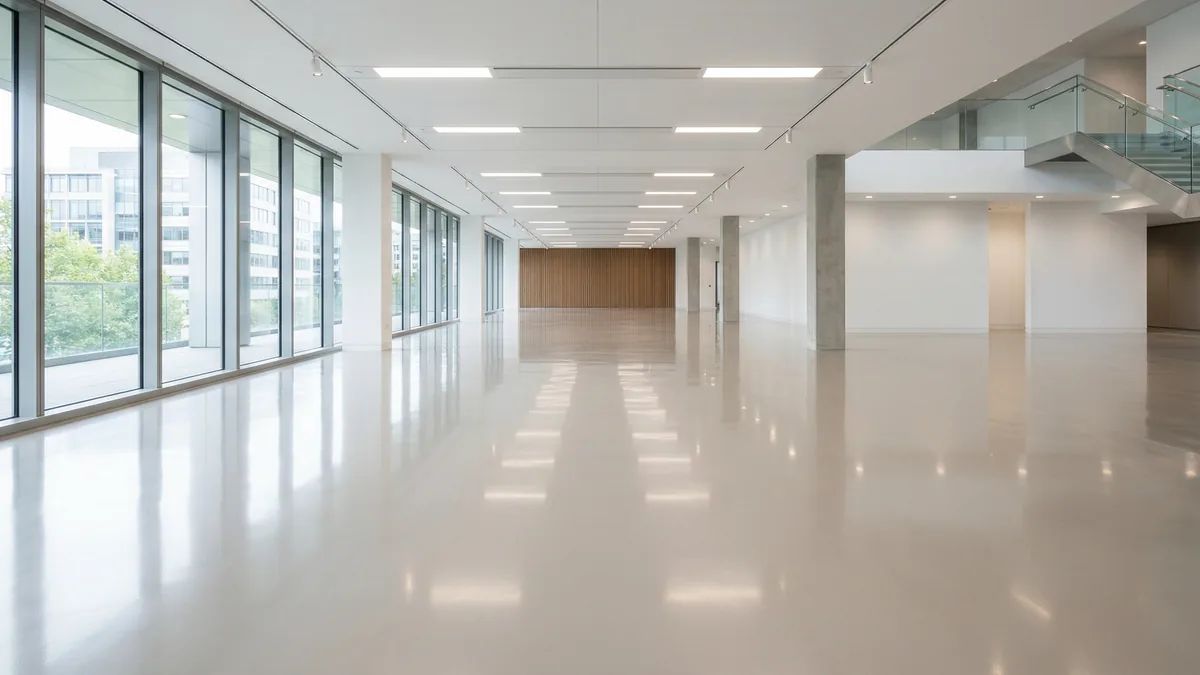
| Self-Leveling Epoxy | $4–$8 | Warehouses, showrooms, offices |
| Quartz-Filled Epoxy | $6–$10 | Commercial kitchens, hospitals, labs |
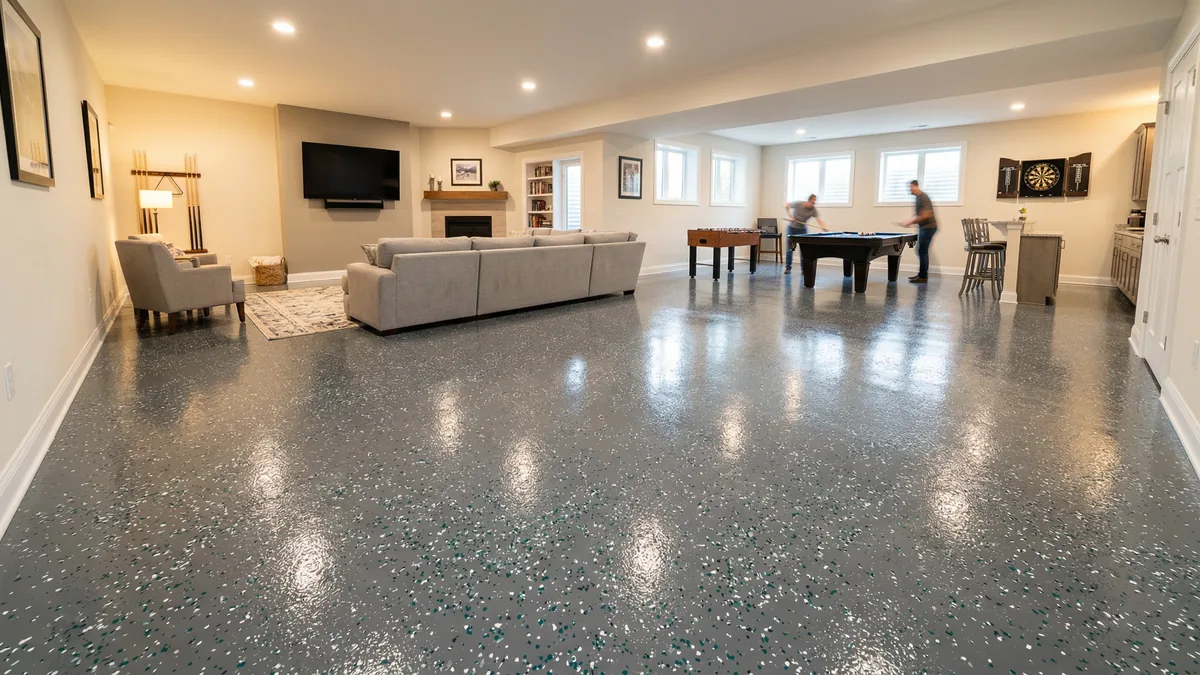
| Epoxy Flake System | $4–$7 | Retail, gyms, car dealerships |
| Epoxy Mortar | $7–$12 | Heavy industrial, manufacturing |
| Anti-Static Epoxy (ESD) | $5–$9 | Electronics, data centers, labs |
For food processing, healthcare, pharmaceutical, and other regulated facilities, confirm the applicable federal, state, local, and facility-specific requirements before selecting a system. Avoid relying on vague "USDA-approved" marketing language; ask the project designer, facility safety team, or authority having jurisdiction what documented cleanability, chemical-resistance, slip-risk, and sanitation requirements apply.
Planning a Commercial Epoxy Project
Commercial projects require more planning than residential ones. Here are the key considerations:
Downtime and scheduling: The biggest concern for most businesses is how long the space will be out of commission. A typical commercial epoxy installation takes 3–5 days for a medium-sized space (2,000–5,000 sq ft), plus cure time. Many commercial contractors offer weekend and after-hours scheduling to minimize disruption. Fast-cure polyaspartic topcoats can also reduce total downtime.
Surface condition: Commercial floors often have years of wear, chemical exposure, old coatings, or patching. Professional assessment is essential, the contractor needs to evaluate the concrete's condition, test for moisture, and develop a prep plan. This is not a project to quote sight-unseen.
Safety features: Consider whether you need anti-slip texture in wet areas, demarcation lines for forklifts and pedestrians, color-coded zones, or ADA-compliant surfaces. These can all be built into the epoxy system.
Ready to Get Started?
Get free, no-obligation quotes from local epoxy flooring contractors in your area.
Get Free Quotes →How to Choose a Commercial Epoxy Contractor
Finding the right contractor for a commercial project is critical. Look for these qualifications:
- Commercial experience: Ask for a portfolio of completed commercial projects similar in scope to yours. The application techniques for a 10,000 sq ft warehouse are very different from a residential garage.
- Proper insurance: Commercial contractors should carry general liability insurance and workers' compensation. Ask for certificates of insurance.
- Product knowledge: The contractor should be able to explain which system is right for your specific use case and why, not just offer one standard option.
- Project management: A commercial contractor should provide a detailed project timeline, scheduling plan, and communication process.
- References: Talk to other business owners who've had similar work done. Ask about the contractor's professionalism, adherence to timeline, and the floor's condition after a year or more.
Cost Considerations for Business Owners
When evaluating the cost of commercial epoxy flooring, consider the full picture:
- Cost of downtime: Factor in lost revenue if your business needs to close during installation. A contractor who can work nights and weekends may save you money overall.
- Lifecycle cost: A quality commercial epoxy floor at $6–$10/sq ft that lasts 10–15 years often costs less over time than cheaper alternatives that need replacement every few years.
- Maintenance savings: Epoxy floors are inexpensive to maintain compared to other commercial flooring options. The seamless surface eliminates grout lines, seams, and joints where dirt accumulates.
- Tax considerations: Commercial flooring can often be depreciated as a capital improvement. Consult your accountant about potential tax benefits.
Next Steps
If you're considering epoxy for a commercial or industrial space, start by documenting the facility use, square footage, traffic, contaminants, floor condition, and shutdown limits. Our commercial flooring project brief builder turns those details into a scope you can use when comparing contractors.
Request free quotes from commercial epoxy contractors in your area, or learn more about commercial epoxy flooring services.
Compare commercial epoxy contractors in Texas
Texas is our most complete market. If you are scoping a commercial floor in the state's largest metros, browse the local contractor lists in Houston, Dallas, Austin, San Antonio, Fort Worth, or El Paso. Each city page lists contractors with their services, ratings, and coverage area so you can filter to the ones that handle commercial work before requesting quotes. For markets beyond the major metros, browse the full Texas directory.
Before you reach out, the contractor hiring checklist walks through the commercial-specific questions worth asking (downtime, phased work, moisture testing, slip-resistance documentation, warranty terms). The epoxy flooring cost calculator gives a ballpark range before you start collecting quotes.
Ready to Get Started?
Get free, no-obligation quotes from local epoxy flooring contractors in your area.
Get Free QuotesTexas contractor directory
Find epoxy contractors by local market
Compare local epoxy flooring companies in the strongest Texas markets before requesting a quote.
Sources and editorial method
This guide is educational content prepared from coating-system specifications, common installation practices, publicly available market information, and the directory's contractor data. Costs and service life are planning ranges, not guarantees. Confirm product specifications, slab conditions, code requirements, and written warranty terms with the contractor and coating manufacturer.
Review our directory methodology, content disclaimer, and contractor hiring checklist.
Find Epoxy Contractors Team
Our editorial team explains epoxy flooring options, cost factors, maintenance, and contractor-selection questions. Guides provide general planning information and are reviewed for consistency with our published methodology and directory disclosures.