Epoxy Floor Maintenance Tips
Free project tools
Use this guide with planning tools
Contractor Hiring Checklist
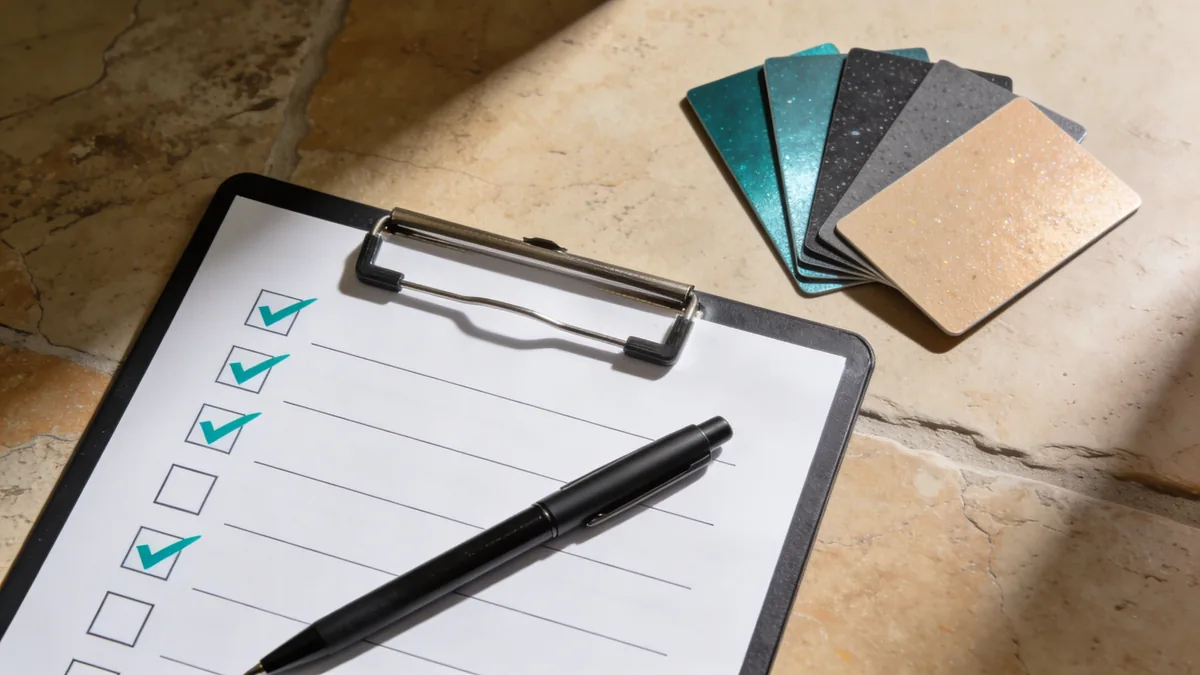
10 essential questions to ask before hiring an epoxy contractor. Check them off as you go.
View Checklist →Epoxy vs Polyurea Comparison
Compare coating systems side by side on cost, durability, cure time, and chemical resistance.
Compare Now →Epoxy & Garage Floor Cost Calculator
Use garage presets or exact dimensions, compare coating systems and preparation, then share a contractor-ready cost plan.
Calculate Cost →One of the best things about epoxy flooring is how little maintenance it requires compared to other flooring types. There's no waxing, no sealing, no grout to scrub. But "low maintenance" doesn't mean "no maintenance." With a few simple habits, you can keep your epoxy floor looking like it was installed yesterday for years to come.
Regular Cleaning Routine
For most residential epoxy floors (garages, basements, laundry rooms), a basic weekly cleaning routine is all you need:
- Sweep or dust mop: Remove loose dirt, dust, and grit regularly. Sand and debris are the main source of micro-scratches that gradually dull the surface over time. A soft-bristle push broom or microfiber dust mop works best.
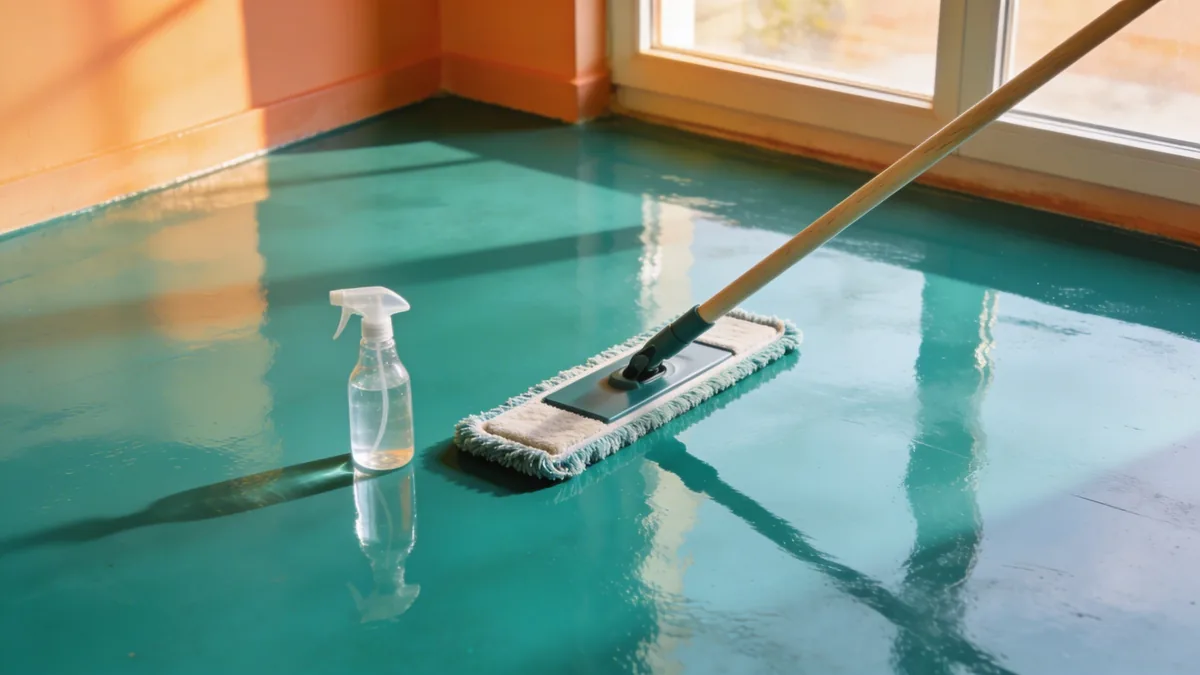
- Mop with warm water: For routine cleaning, plain warm water and a microfiber mop is sufficient. Wring the mop well, you don't need to soak the floor.
- Use a mild cleaner when needed: For scuffs, light stains, or general grime, add a small amount of dish soap or a pH-neutral floor cleaner to your mop water. Avoid harsh chemicals, vinegar, or citrus-based cleaners, which can dull the topcoat over time.
- Spot-clean spills promptly: While epoxy resists most stains, certain substances (especially automotive fluids, paint, and some chemicals) can leave marks if left sitting for extended periods. Wipe them up when you notice them.
Deep Cleaning Your Epoxy Floor
Every few months, or after heavy use, give your floor a more thorough cleaning:
- Sweep thoroughly first: Remove all loose debris before wet-cleaning to prevent scratching.
- Use a diluted ammonia solution: Mix about 3–5 ounces of clear ammonia per gallon of water. This cuts through grease and grime without damaging the epoxy. Apply with a mop, let it sit for a few minutes, then mop clean.
- Scrub stubborn spots: For tough stains (tire marks, dried spills), use a soft nylon scrub pad with your cleaning solution. Never use steel wool or abrasive pads, which can scratch the surface.
- Rinse and dry: After cleaning, go over the floor once with clean water to remove any residue. For best results, use a squeegee to push excess water toward a drain.
Never use a pressure washer on an epoxy floor. The concentrated water pressure can damage the topcoat and can force water under the edges of the coating, causing delamination.
Ready to Get Started?
Get free, no-obligation quotes from local epoxy flooring contractors in your area.
Get Free Quotes →What to Avoid
Certain products and habits can damage your epoxy floor. Steer clear of these:
- Soap-based cleaners (like Pinesol or Murphy's Oil): These leave a residue that builds up over time and creates a hazy film on the surface.
- Vinegar or citrus cleaners: Acidic cleaners can etch and dull the clear topcoat with repeated use.
- Abrasive tools: Steel wool, stiff wire brushes, and rough scouring pads will scratch the surface. Stick to soft nylon or microfiber.
- Dragging heavy objects: Use furniture pads, plywood sheets, or dollies when moving heavy items across the floor. A single drag from a sharp metal edge can gouge the coating.
- De-icing salt piled in one spot: Road salt won't damage epoxy on contact, but large piles of salt left sitting in one area over time (especially with melting snow) can degrade the surface. Sweep up salt accumulation regularly during winter.
Dealing with Tire Marks
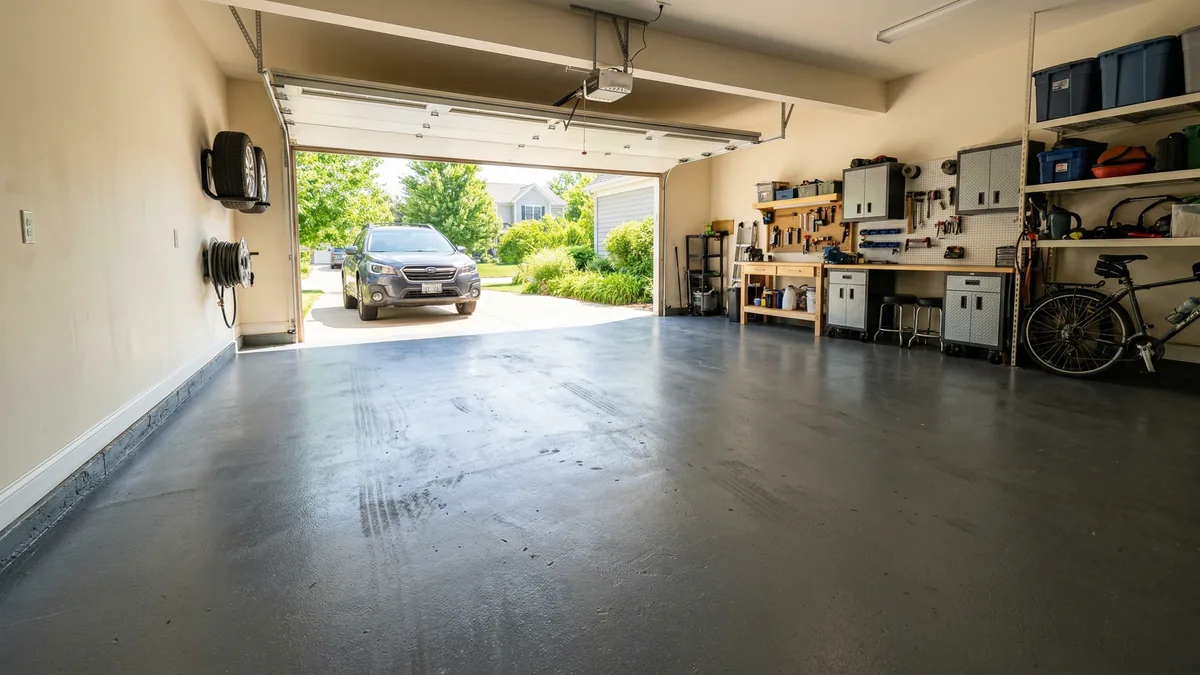
Tire marks (also called hot-tire pickup) are one of the most common concerns for garage epoxy floors. When you park a hot car on an epoxy floor, the heat and chemicals from the tires can leave marks or, in worse cases, lift the coating.
The good news: on a properly installed floor with a polyurethane or polyaspartic topcoat, tire marks are typically just surface marks that clean off easily with warm water and ammonia solution. If you're experiencing actual coating lift (sticky spots, peeling under tires), that's a sign of a deeper issue with the coating system or installation quality.
To prevent tire marks, some homeowners place inexpensive tire mats (thick rubber or PVC pads) where their tires rest. This is especially helpful in the first few weeks after installation while the floor reaches full cure hardness.
When to Recoat
Even with great maintenance, epoxy floors will eventually show their age. Here are signs it may be time for a maintenance recoat (applying a new clear topcoat over the existing floor):
- The floor has noticeably lost its gloss and looks flat even after cleaning.
- High-traffic areas show wear patterns or thinning.
- Small chips or scratches are accumulating.
- The floor is still well-bonded (no peeling or bubbling), but the surface just looks tired.
A maintenance topcoat, typically just a fresh layer of clear polyurethane or polyaspartic, can restore the appearance and add years of protection at a fraction of the cost of a full redo. Most floors benefit from a topcoat refresh every 5–7 years in garage settings, or less frequently in basements and lighter-use areas.
Quick Reference Maintenance Schedule
| Task | Frequency |
|---|---|
| Sweep / dust mop | Weekly (or as needed) |
| Damp mop with water | Every 1–2 weeks |
| Deep clean with ammonia solution | Every 3–4 months |
| Spot-clean spills and stains | As they occur |
| Professional topcoat refresh | Every 5–7 years (garage) or as needed |
With these simple habits, your epoxy floor will stay clean, glossy, and durable for years. For more on what to expect from your floor over time, check out our guide on how long epoxy flooring lasts.
Ready to Get Started?
Get free, no-obligation quotes from local epoxy flooring contractors in your area.
Get Free QuotesTexas contractor directory
Find epoxy contractors by local market
Compare local epoxy flooring companies in the strongest Texas markets before requesting a quote.
Sources and editorial method
This guide is educational content prepared from coating-system specifications, common installation practices, publicly available market information, and the directory's contractor data. Costs and service life are planning ranges, not guarantees. Confirm product specifications, slab conditions, code requirements, and written warranty terms with the contractor and coating manufacturer.
Review our directory methodology, content disclaimer, and contractor hiring checklist.
Find Epoxy Contractors Team
Our editorial team explains epoxy flooring options, cost factors, maintenance, and contractor-selection questions. Guides provide general planning information and are reviewed for consistency with our published methodology and directory disclosures.