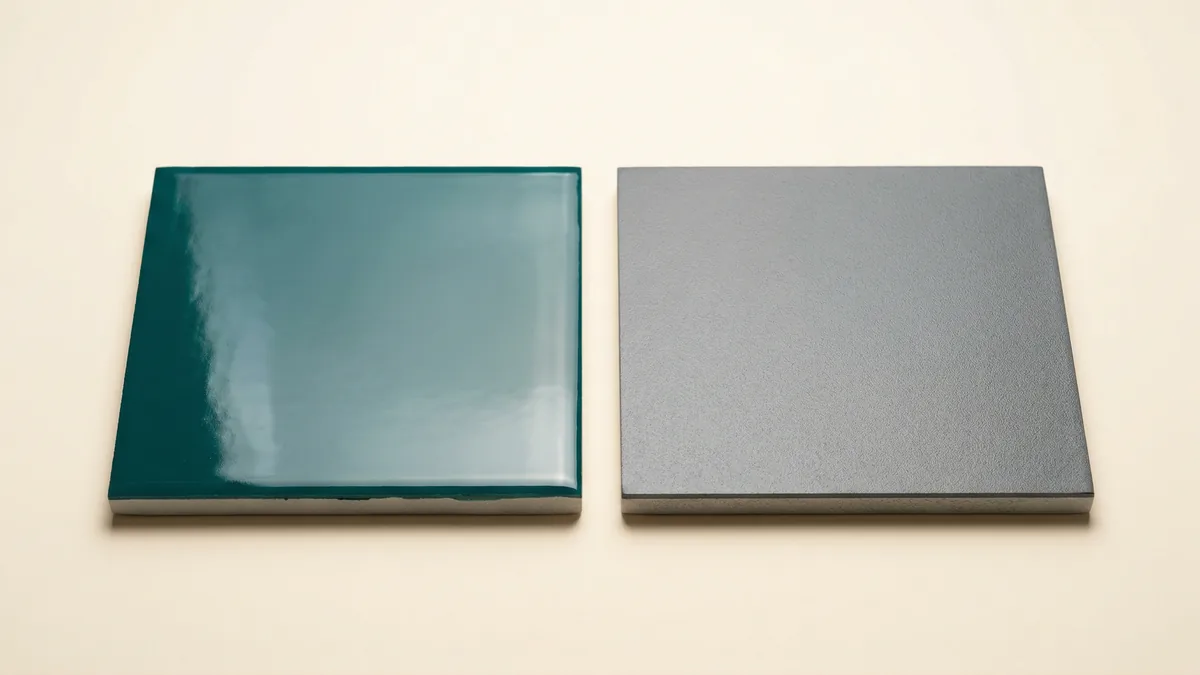
DIY vs Pro Garage Epoxy
Free project tools
Use this guide with planning tools
Contractor Hiring Checklist
10 essential questions to ask before hiring an epoxy contractor. Check them off as you go.
View Checklist →Epoxy & Garage Floor Cost Calculator
Use garage presets or exact dimensions, compare coating systems and preparation, then share a contractor-ready cost plan.
Calculate Cost →Coating Type Selector Quiz
Answer 5 quick questions and get a personalized recommendation for the best epoxy coating for your space.
Find Your Coating →The idea of coating your own garage floor with a DIY epoxy kit is tempting. The kits at your local home improvement store cost a fraction of what a contractor charges, and the packaging makes it look straightforward. But is DIY epoxy actually a good idea? In this guide, we compare the real costs, results, and trade-offs of doing it yourself versus hiring a contractor. Our professional installation guide explains the preparation, coating, and curing stages you should expect from a qualified crew.
The Real Cost Comparison
Let's start with what most people care about first: money.
| Factor | DIY Kit | Professional Installation |
|---|---|---|
| Materials (2-car garage) | $200–$600 | Included in total |
| Tool rental (grinder, etc.) | $150–$300 | Included |
| Total cost | $350–$900 | $2,200–$4,500 |
| Your time investment | 15–25 hours | 0 hours (you're not involved) |
| Expected lifespan | 2–5 years | 10–20 years |
| Warranty | None (product only) | 2–5 years (labor + materials) |
At first glance, DIY looks like a clear money-saver. But when you factor in the shorter lifespan, the cost per year tells a different story. A $600 DIY job that lasts 3 years costs $200/year. A $3,000 professional job that lasts 15 years costs $200/year, the same annual cost, but with a vastly better result for 12 additional years.
Where DIY Falls Short
The biggest challenge with DIY epoxy isn't the application itself. It's everything that comes before it.
Surface preparation: This is where most DIY projects fail. Home improvement store kits typically include an acid-etch solution that you mop onto the floor. Acid etching alone doesn't create the surface profile needed for long-term adhesion, especially on older, contaminated concrete. Professional contractors use diamond grinders or shot blasters that mechanically abrade the surface to create a proper bonding profile.
Product quality: Most retail kits use water-based epoxy with a solids content of 40–60%. Professional coatings are typically 100% solids, meaning the entire product cross-links into a hard, dense film. The difference in thickness and durability is dramatic, a DIY single coat might be 3–5 mils thick, while a professional multi-coat system can be 15–20+ mils.
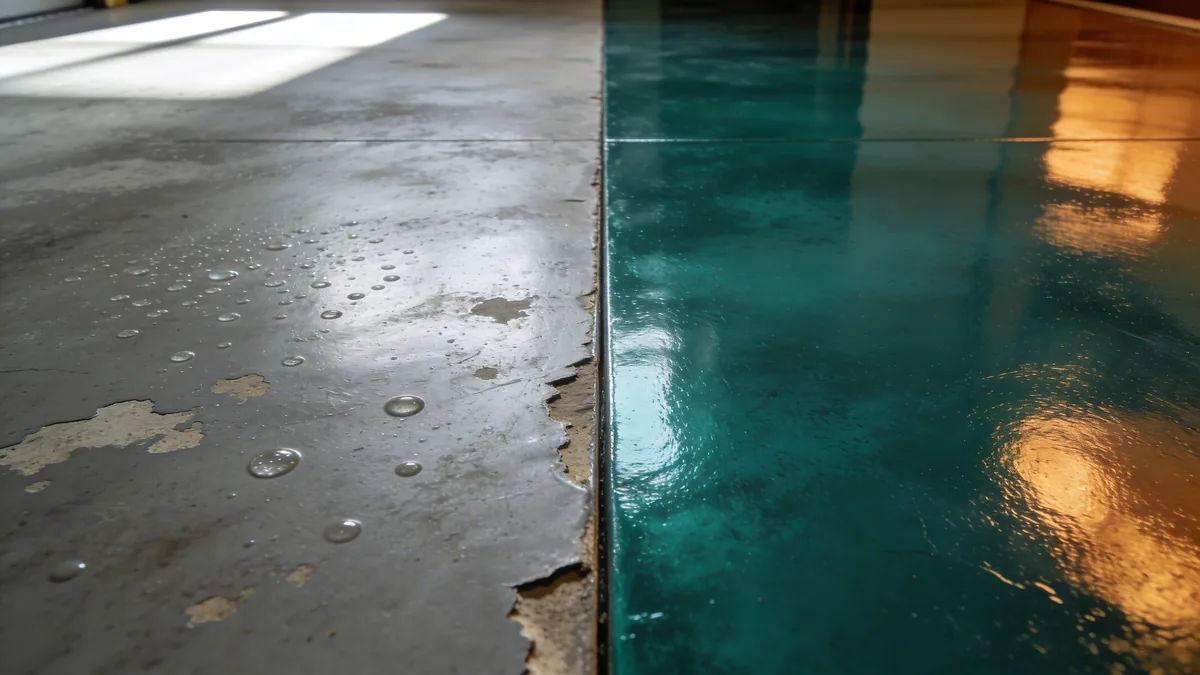
Moisture issues: Contractors test for moisture vapor transmission before coating. If your slab has a moisture problem (common in older homes), epoxy will bubble, peel, or delaminate. Most DIY kits don't include moisture testing, and many homeowners don't know to check.
The most common complaint with DIY epoxy kits is peeling. It usually starts within 6–18 months in areas where tires sit or where the floor sees the most traffic. By that point, stripping and redoing the floor costs as much as, or more than, having it done professionally in the first place.
Ready to Get Started?
Get free, no-obligation quotes from local epoxy flooring contractors in your area.
Get Free Quotes →When DIY Can Work
To be fair, there are situations where a DIY approach makes sense:
- Low-traffic utility spaces: A storage room, workshop corner, or laundry area that doesn't see vehicle traffic or heavy wear.
- Temporary solution: If you're planning to sell your home and just want the floor to look presentable for a year or two.
- You have experience: If you've worked with concrete coatings before and understand proper prep, moisture testing, and application technique.
- New, clean concrete: Fresh concrete (properly cured for 28+ days) in excellent condition is the easiest surface to coat and gives DIY kits the best chance of success.
What Professional Installation Gets You
Beyond the coating itself, hiring a qualified contractor provides several advantages that are difficult to replicate on your own:
- Proper equipment: Industrial diamond grinders, vacuums with HEPA filtration, moisture meters, and professional-grade application tools.
- Expert surface assessment: Experienced contractors can identify problems (cracks, moisture, prior coatings, oil contamination) and address them before coating.
- Better materials: Access to commercial-grade products not available in retail stores.
- Correct timing: Epoxy is sensitive to temperature, humidity, and pot life. Contractors know how to work within these constraints for optimal results.
- Warranty protection: If something goes wrong, a contractor's warranty covers the repair or redo at no additional cost to you.
The Verdict
For most homeowners, professional installation is the better long-term investment for garage floors and any space that sees real use. The upfront savings of DIY are largely offset by shorter lifespan, lower durability, and the risk of failure.
If you have a small utility area, limited budget, and reasonable expectations about longevity, a quality DIY kit applied to clean, well-prepped concrete can be a functional short-term solution. But for your primary garage floor, the one you'll walk and drive on every day for the next decade, professional installation is worth the investment.
Curious about what professional epoxy would cost for your garage? Get free, no-obligation quotes and see how the numbers compare. You can also try our cost calculator for an instant estimate.
Ready to Get Started?
Get free, no-obligation quotes from local epoxy flooring contractors in your area.
Get Free QuotesTexas contractor directory
Find epoxy contractors by local market
Compare local epoxy flooring companies in the strongest Texas markets before requesting a quote.
Sources and editorial method
This guide is educational content prepared from coating-system specifications, common installation practices, publicly available market information, and the directory's contractor data. Costs and service life are planning ranges, not guarantees. Confirm product specifications, slab conditions, code requirements, and written warranty terms with the contractor and coating manufacturer.
Review our directory methodology, content disclaimer, and contractor hiring checklist.
Find Epoxy Contractors Team
Our editorial team explains epoxy flooring options, cost factors, maintenance, and contractor-selection questions. Guides provide general planning information and are reviewed for consistency with our published methodology and directory disclosures.